Public Sphere
NGOs Case
Gender Perspective
WHRD
Supreme Council of Armed Forces
Repression
Monitor the Parliamentarian Election 2010
Violence Against Women
Draft Law
Exploring Taboos
Women Politicians
Egyptian Parliament
Sexual Harassment
Iran
Islamic Feminism
Gender Mainstreaming
Bahrain
Transitional Justice
International Agreements
Films
Independent Women NGOs Coalition
UN
Women Trafficking
Women Rights
Solidarity
Training
Storytelling
Oman
Nigeria
Nazra Newsletter
Tips and Guidelines
Virginity Test
Peaceful Assemblies
Feminism
Sexuality
Women and Parliament
Elections
Constitution
Masculinity
The National Council for Women
Human Rights Council
Sudan
Early Marriage
Public Sphere
- Research Paper
Analytical Paper: the Right of Women to Public Political Space
28 Jul 2013Issues of political participation of women are among the most controversial issues in countries like Egypt which is witnessing for many years now considerable political mobility in which women have been participating very actively. Such political mobility was renewed and manifested itself in a new wave of the Egyptian revolution on the 30th of June 2013, leading to the removal of Mohammed Morsi from power and the assignment of the president of the Supreme Constitutional Court as an interim president.
- Report
Profile | 16 Female Candidates for the People’s Assembly Elections 2011/2012
3 Sep 2012Naza for Feminist Studies today released a brochure to present short profiles about 16 female candidates for the People’s Assembly elections 2011/2012 that Nazra for Feminist Studies worked with through the Women Political Participation Academy that Nazra launched in October 2012
The profile if each candidate in the brochure include the name, age, job, type of candidacy, political history and the election result. You can read the brochure by clicking here. - News
Testimonies on the Recent Sexual Assaults on Tahrir Square Vicinity
13 Jun 2012Today, 13 June, 2012, is the day to tweet and blog against sexual harassment in Egypt. On this occasion, Nazra for Feminist Studies is publishing three testimonies of women who were sexually assaulted by a mob on Mohammed Mahmoud Street on Saturday, 2 June.
- Joint Statement
Abbasiya Events a Continuation of SCAF’s Systematic Violations of Human Rights in the Transitional Period
7 May 2012The undersigned Egyptian rights organizations condemn the treatment of sit-ins and demonstrations in Egypt from the time of the ouster of former president Hosni Mubarak until now, as a result of which hundreds have been killed and thousands injured and detained. We note that increasing social violence is linked to the insistence of the Supreme Council of the Armed Forces (SCAF) on pursuing policies of suppressing freedom of expression and using the military judiciary as a tool to subjugate civilians and harass peaceful activists.
- Report
Manual on Women Human Rights Defenders
30 Apr 2012Executive Summary- The Women Human Rights Defenders program at Nazra for Feminist Studies is launching its manual on Women Human Rights Defenders (WHRDs). Rather than translate into Arabic manuals that have been produced by other organizations, the WHRD program opted to produce it’s a manual that is especially tailored to the Egyptian context.
- Research Paper
Women and Constitution Working Group Document
26 Apr 2012In May 2011, the Women and Memory Forum has initiated the "Women & Constitution Working Group". The working group saw the light after the January 2011 Revolution and is part of the Coalition of Egyptian Feminist Organizations. The working group has been working in coordination with the "Let's Write Our Constitution" initiative and the "Popular Committee for Constitution Writing". The "Women & Constitution Working Group" has studied gender relevant articles in Egyptian constitutions and in other countries' constitutions.
- Joint Statement
Continued Militarization: Increased Violence Against Women Human Rights Defenders During Dispersal of Cabinet Sit-in... Women Activists Beaten, Brutalized and Subjected to Sexual Violence
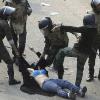
18 Dec 2011The targeting of Women human rights defenders seen over the course of an entire day, when the sit-in at the cabinet building was dispersed at dawn on December 16, is a continuation and clear escalation of militaristic policies aimed at Women human rights defenders, employed consistently by the former regime prior to the January 25 revolution. The policy of targeting Women human rights defenders is part of attempts by those currently in charge of the country, the various security agencies, and the remnants of the former regime to expel women from the public sphere.
- Report
During the Celebration of the International Day on Women Human Rights Defenders: Women Activists Are Still Being Pushed Away from the Public Sphere by the Authorities
11 Dec 2011The Women Human Rights Defenders Program (WHRDP), of Nazra for Feminist Studies, is launching today its first report “A Continuation of Violations: Military Policy Towards Women Human Rights Defenders” on the ongoing state’s discriminatory policies against women human rights defenders since the Mubarak's regime till now.
- Joint Statement
Egyptian Human Rights Organizations Stops their Participation in an International Campaign Against Gender Based Violence
25 Nov 2011Today marks the International Day for The Elimination of Violence Against Women, and we as feminist organizations wanted to take part in the 16 days of Activism Against Gender Based Violence Campaign by organizing events in Egypt, especially that this year’s theme is challenging Militarism and Ending Violence against Women.
- News
Egypt's Supreme Constitutional Court: Female Judges Can Serve
20 May 2010Egypt's Supreme Constitutional Court [official backgrounder] ruled Sunday 14th March 2010 that female judges can serve on the State Council (Maglis id-Dowla), an administrative court system with jurisdiction over cases involving the state. In its ruling, the court emphasized the equality of all citizens .